
An allergen matrix is a practical record showing which regulated allergens are present in each dish. It helps your team give customers accurate information, but it is only reliable when it reflects the recipes and ingredients you actually use.
You do not need a complicated system. You do need a clear process for checking recipes, recording evidence and updating the matrix when something changes. Here is a step-by-step walkthrough you can use for your restaurant menu.
What should your allergen matrix do?
Your matrix should make it straightforward to answer a simple question: which of the 14 regulated allergens are present in each dish? It should be clear enough for staff to use during service and easy to update when recipes, suppliers or products change.
For non-prepacked food, such as meals served in a restaurant, allergen information must be accurate and available to customers. The Food Standards Agency (FSA) recommends providing written information that is easy to access and understand, with a staff conversation to support it. A matrix is one useful format; it does not replace staff training or safe food-handling procedures.
The 14 regulated allergens are celery; cereals containing gluten; crustaceans; eggs; fish; lupin; milk; molluscs; mustard; peanuts; sesame; soybeans; sulphur dioxide and sulphites above the specified threshold; and tree nuts. For cereals and tree nuts, record the specific type where relevant, for example, wheat or almond.
Step 1: How do you gather reliable recipe information?
Start with the dishes currently on sale, not an old menu or a chef’s memory. Make a list of every dish, side, sauce, garnish, dressing and optional extra. Include drinks or specials if you provide allergen information for them.
Next, collect the recipe and ingredient details for each item. Check:
- Standardised recipes and recipe cards
- Product labels and supplier specifications
- Ingredients in bought-in sauces, stocks, marinades and seasoning mixes
- Garnishes, cooking oils and finishing ingredients
- Ingredient details for substitutions or optional components

This step matters because allergens are easy to overlook in compound ingredients. A dressing, stock cube or ready-made sauce may contain an allergen that is not obvious from the dish name. Keep copies of relevant product labels or specifications so the reasoning behind each entry can be checked later. If an ingredient’s status is unclear, ask the supplier or verify the label. Do not guess.
Step 2: How should you lay out the matrix?
Use one row per dish and one column for each of the 14 regulated allergens. Put the dish name in the first column. Use words such as “Contains” or a simple, consistently explained mark to show presence.
For example, a draft row might show that a dish contains wheat, milk and mustard. If you also use a mark for “not present”, explain it clearly and use it only when you have checked the ingredients. An empty cell should not be treated as a confirmed “no”: it may simply mean that the information has not been checked.
The FSA’s example allergen matrix is a useful starting point. Adapt your layout to suit your menu, but make sure the customer-facing version clearly identifies allergens by name. If you use symbols, include a key that gives the allergen names in words.
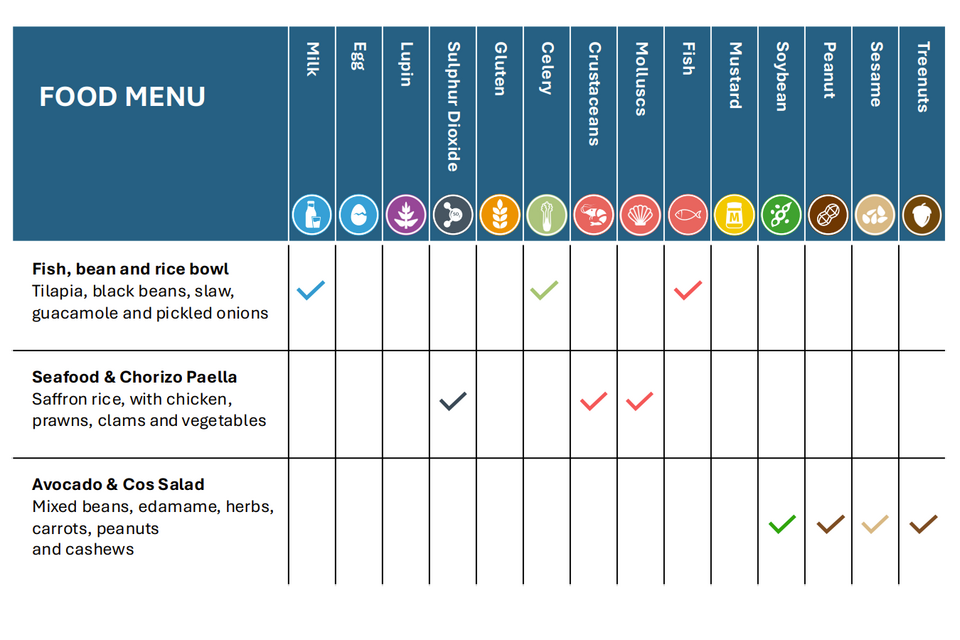
Step 3: How do you check every dish accurately?
Work through each recipe ingredient by ingredient. Compare the recipe with the current product label or supplier specification, then record any relevant allergens in the matching columns. Check small components carefully: a bun, dressing or garnish can change the allergen information for the whole dish.
If a dish has separate components, it can help to record those details as well as the overall dish. For example, note the ingredients in a burger, bun, sauce and side separately. This gives staff a clearer basis for discussing possible changes with a customer. However, do not promise that removing one component makes a dish safe: you must also consider preparation and cross-contact.
A matrix should describe the food as it is actually prepared and served. If you change the recipe, check the change against the supplier information and update the record before giving customers the revised information.
Step 4: How do you handle “may contain” and cross-contact?
Keep ingredient information and cross-contact risks distinct. A “may contain” statement is not a substitute for checking what is in the recipe. It relates to possible unintended presence, which needs to be considered separately and handled responsibly.
Your kitchen procedures should address the risks involved in preparing an allergy order. Depending on your operation, this may include cleaning work surfaces and equipment, washing hands, using clean utensils, keeping ingredients separate and checking shared cooking equipment or oil. Staff should know how to communicate a customer’s request to the person preparing the dish and how to confirm the correct meal is served.
If you cannot provide accurate information or manage the risk for a particular request, say so clearly. It is better to explain the limitation than to make an assurance you cannot support.
Step 5: How do you keep the matrix current?
A matrix can become inaccurate quickly if no one owns its upkeep. Name a responsible person, such as the head chef or manager, and keep a simple change log showing what changed, when it changed and who checked it.
Review the relevant entries whenever:
- You change a recipe, garnish or portion component
- A supplier or product brand changes
- A product label or specification is updated
- You add a special, seasonal dish or menu
- A substitution is made because an ingredient is unavailable
Another thing you should think about is how the latest version reaches the whole team. Remove or clearly mark outdated copies. Keep a current version where staff can access it during service, and make sure the customer-facing information matches the kitchen record.
Step 6: How will customers and staff use it?
Written information should be easy for customers to find. It can appear on the menu, in a separate booklet, on a display or in a digital format. If customers need to ask for it, display a clear message explaining how to obtain the information. The FSA’s best-practice guidance for non-prepacked food recommends that written information be readily available and supported by a conversation.
Train staff to locate the current matrix, ask the right questions and pass allergy requests clearly to the kitchen. A simple handover might be: “The customer has told us they need to avoid milk. Please check the current matrix and confirm whether this dish can be prepared safely.” The person taking the order should not rely on memory or guesswork.

For online or telephone orders, make allergen information available before the customer orders and again when the food is delivered, following the FSA guidance. If you sell prepacked for direct sale (PPDS) food, food packed at the same premises before the customer selects or orders it, different labelling rules apply. Check the FSA’s PPDS labelling guidance, as PPDS food generally needs a full ingredients list with regulated allergens emphasised.
What should your finished documentation include?
A useful documentation pack usually includes the customer-facing matrix, standardised recipes, current supplier labels or specifications, and a change log. Add a written procedure for receiving and handling allergy requests, plus staff training records. Your matrix is the quick reference; the supporting documents show how you verified it.
If you would like help reviewing kitchen processes, recipes and food-safety documentation, Operational Chef Consultant’s business consultancy service can support your operational review.
How can you make the matrix work in service?
Build the matrix from current recipes and supplier evidence, include all 14 regulated allergens, and make the information clear to both customers and staff. Then put a process in place to update it whenever ingredients or preparation methods change. A matrix is only useful when it is accurate, accessible and used by the team.
Use the FSA links above to check current guidance for your location and business model. For questions about your specific circumstances, contact your local authority’s food safety or trading standards team.
