
Table of Contents
- Why Reducing Restaurant Food Waste Matters for Your Bottom Line
- Step 1: Measure What You Throw Away with a Food Waste Audit Template
- Step 2: Implement Food Waste Reduction Strategies in Your Kitchen
- Step 3: Use Restaurant Inventory Management Software to Track Stock
- Step 4: Train Your Team on Waste Handling and Portion Control
- Common Mistakes to Avoid When Cutting Food Waste
- Conclusion: Start Reducing Waste in Your Restaurant Today
- Frequently Asked Questions
Last Updated: 9 September 2026
Why Reducing Restaurant Food Waste Matters for Your Bottom Line
Food waste is one of the few costs in a commercial kitchen that you can control completely, yet most operators treat it as an unavoidable overhead. Every spoiled case of produce and every scraped plate represents money that has already left your bank account with zero return. Learning how to reduce restaurant food waste is not just an environmental talking point; it is a direct lever on your gross profit margin.
The discipline required to cut waste overlaps heavily with the operational structure that keeps a kitchen running smoothly. At Operational Chef Consultant, we have observed that kitchens which track their waste tightly tend to run cleaner services, happier shifts, and healthier budgets. WRAP UK research on hospitality food waste indicates that the hospitality sector discards significant tonnage annually, much of it preventable through better purchasing and preparation habits.
Below, we will walk through a practical, four-step system for measuring, cutting, and preventing waste in your kitchen. These food waste reduction strategies are designed to be implemented this week, not next quarter.
Step 1: Measure What You Throw Away with a Food Waste Audit Template
You cannot manage what you do not measure, and in a busy kitchen, waste tends to hide in plain sight. A food waste audit template gives you a simple, repeatable way to record what leaves your kitchen in the bin rather than on a plate.
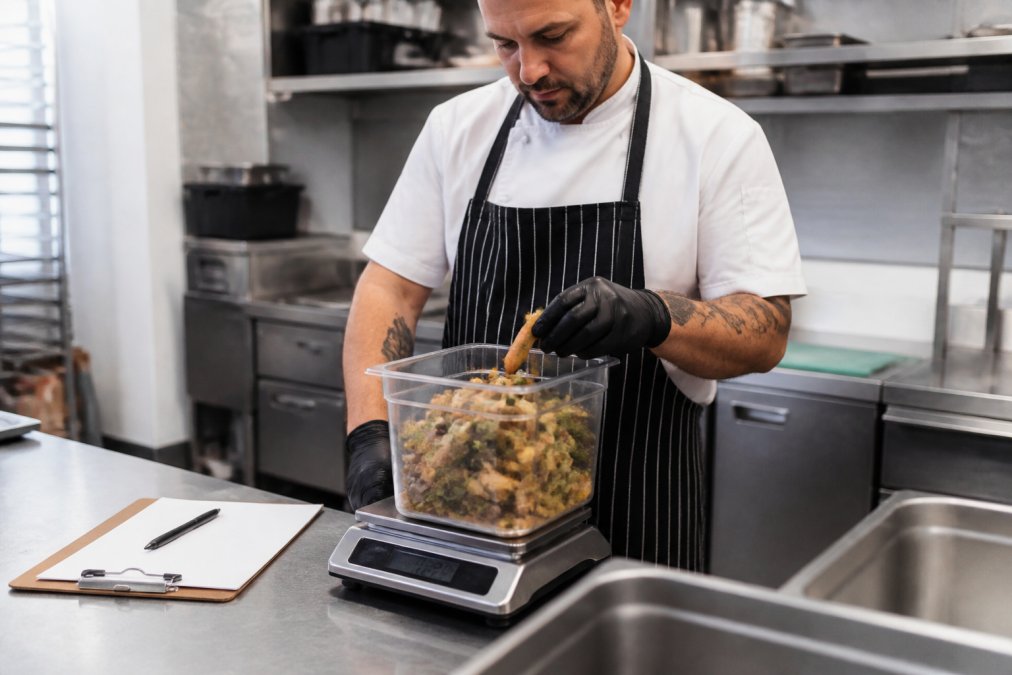
Set up a dedicated bin or tray on your prep bench for one full week. Label four columns on your audit sheet: item wasted, estimated weight, reason (overproduction, spoilage, trim loss, or plate waste), and the section of the kitchen responsible. Weigh everything at the end of each service and log it.
By day three, patterns will emerge. You might notice that the fish supplier’s portion sizes run large, or that pastry over-orders cream because nobody checks the walk-in first. A common mistake is treating the audit as a one-off exercise; run it for a full week each quarter to keep the data fresh. This baseline tells you exactly which food waste reduction strategies will deliver the biggest return.
Step 2: Implement Food Waste Reduction Strategies in Your Kitchen
Once the audit reveals where the losses are happening, you can target them with specific fixes. The most effective food waste reduction strategies fall into three buckets: purchasing discipline, preparation technique, and menu design.
Start with purchasing. Match your order to your actual covers from the same week last year, not your hopeful projections. If your audit shows spoilage of fresh herbs or dairy, buy smaller quantities more frequently rather than bulk-buying for a discount that evaporates in the bin.
On the prep side, adopt a “root-to-stem” approach. Carrot tops become pesto, vegetable peelings go into stock, and bread trimmings become panzanella or croutons. This is not about being trendy; it is about extracting full value from every ingredient you pay for. UK Hospitality guidance on sustainable kitchen practices encourages operators to view by-products as ingredients rather than rubbish.
Menu design also plays a role. If your audit shows consistent plate waste on a particular dish, the portion is likely too large or the components are unpopular. Adjust the plate rather than accepting the loss.
Step 3: Use Restaurant Inventory Management Software to Track Stock
Manual stock-taking is where waste prevention quietly dies, because it relies on memory and gets skipped during busy weeks. Restaurant inventory management software automates the counting process and, more importantly, connects your purchasing directly to your actual usage. optimise waste collection.
Modern systems let you log deliveries, track usage against recipes, and generate par levels based on real consumption data. When the system tells you that you used 12 kilograms of chicken breast last week and you have 8 kilograms in the fridge, your order quantity becomes obvious. This removes the guesswork that leads to overbuying and the spoilage that follows.
Look for software that integrates with your EPOS till system, so sales data flows straight into your stock records. The reporting features will highlight items with high variance between what you purchased and what you sold, flagging theft, over-portioning, or waste before they become a habit. The time saved on manual counting is a bonus, but the accuracy is the real win.
Step 4: Train Your Team on Waste Handling and Portion Control
The best systems fail if the brigade does not buy into them. Your team needs to understand that the effort to reduce restaurant food waste is a kitchen-wide responsibility, not just a manager’s spreadsheet exercise.
Run a short training session that shows the financial impact of waste in terms your chefs understand. If a case of tomatoes costs £18 and half goes in the bin, that is £9 of pure loss on one item in one shift. Multiply that across a week and the numbers become compelling. Show them the audit results from Step 1 so they see their own section’s contribution.
Portion control is the most visible daily battle. Standardise your recipes with weighed portions and invest in the right scoops, ladles, and scales. A common mistake is assuming experienced chefs will portion consistently by eye; they will not, especially under pressure on a Saturday service. Regular spot-checks during service keep portions honest, and a clear policy on reusing trimmings ensures nothing valuable is discarded by default.
Skipping the training step is the fastest way to sabotage your waste programme. If your team sees the audit as a management exercise rather than a shared goal, they will revert to old habits within two weeks, and your food waste reduction strategies will quietly fail.
Common Mistakes to Avoid When Cutting Food Waste
Even with the right intentions, several pitfalls can derail your efforts. Being aware of them keeps your programme on track.
Ordering for the supplier’s schedule, not your covers. Buying in bulk because the delivery driver comes twice a week rather than daily leads to spoilage. Adjust your delivery frequency to match your usage, even if it means a smaller discount.
Confusing waste with spoilage. Spoilage is food that goes off; waste is food you throw away while still usable. Many kitchens track only the former and miss the steady drain of overproduction and trim loss. Your audit must capture both.
Ignoring the front of house. Plate waste is a vital signal. If customers are leaving chips or vegetables uneaten, the portion is too large or the preparation is off. Sustainable Restaurant Association resources for members provides case studies showing how customer feedback loops tighten portion accuracy. Your waiting staff should report back on what is coming to the kitchen unfinished.
Trying to fix everything at once. Pick the top three sources of waste from your audit and address those first. A scattergun approach overwhelms the team and produces no measurable result.
Conclusion: Start Reducing Waste in Your Restaurant Today
The gap between knowing you waste food and actually stopping it comes down to consistent execution. Measuring your waste, adjusting your purchasing, using restaurant inventory management software, and training your team are the four pillars of a system that protects your margins every single service.
Getting the structure right often requires an outside perspective, particularly when staffing pressures make it hard to step back from the pass. That is where our consultancy work comes in. At Operational Chef Consultant, we help UK hospitality businesses refine their kitchen operations, from waste management to revenue growth, and we can deploy vetted temporary or permanent chefs to cover gaps while your team focuses on these improvements. Our team brings over 25 years of experience to your kitchen.
Frequently Asked Questions
What are the main causes of food waste in professional kitchens?
The main causes are over-purchasing stock, over-portioning dishes, spoilage from improper storage, and trimmings from vegetable and meat preparation. Mistakes during cooking, such as burning or over-seasoning, also contribute. Most waste happens before the food reaches the customer, so focusing on preparation and storage habits delivers the fastest results. Conducting a proper audit will help you pinpoint which of these areas is costing you the most.
How does reducing food waste improve restaurant profit margins?
Every kilogram of food you don’t throw away is money saved on your next order. Reducing waste lowers your cost of goods sold (COGS) directly, which improves your gross profit margin without needing to raise menu prices. It also reduces the time staff spend on prep and bin runs, freeing them up for revenue-generating tasks. In practice, most kitchens find that cutting waste can significantly improve their net profit margin.
What is the most effective way to track food waste in a restaurant?
Start with a simple food waste audit template that categorises waste into preparation, spoilage, and plate waste. Weigh and record everything for at least one full week, including weekends. Once you have a baseline, use restaurant inventory management software to track stock levels and identify ordering patterns that lead to over-purchasing. Digital tools help you spot trends over time, making it easier to adjust portions and purchasing decisions.
The challenge is clear: waste is a leak in your profitability that you can seal starting today. If you need support implementing these systems or filling staffing gaps to give your team the time to focus on them, we can help. Let’s Do This. Get started with Operational Chef Consultant and build a kitchen that is as efficient as it is profitable.
